The Two-Centimetre Rule: How to Patch-Test British Grass Extracts Without Wasting a Jar
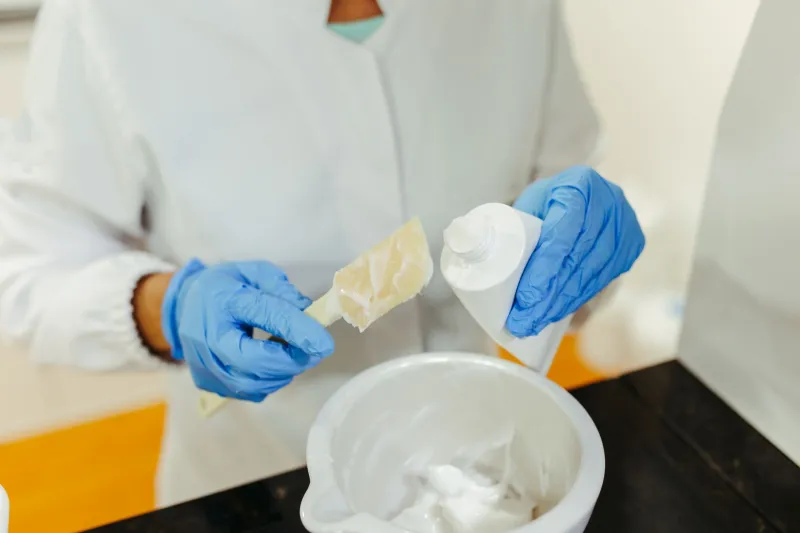
By mid-November 2026, the UK skincare shelf has gone green in every sense. Ryegrass, barley grass, nettle, clover, yarrow, plantain, fermented grass and a dozen meadow-adjacent blends are all asking for space on your face. The trouble is that a grass extract is not a single, tidy thing. It is a plant material, a solvent, a preservative system and a marketing story in one bottle. That is exactly why a small, boring patch test still earns its place.
This is not a scare story. Most people will get on fine with most well-formulated grass botanicals. But a patch test is cheap insurance against a week of angry cheeks, and it stops you wasting a whole jar on a product your skin quietly hates. Think of it as a two-centimetre rule: a small square of skin, a small amount of product, and a small amount of patience before you commit.
One new thing at a time
The first rule is less glamorous than any ingredient list: do not test three new grass products in the same week. If you introduce a cleanser, a serum and a moisturiser together and your jaw turns pink, you have learned nothing except that something in your routine is unhappy. Test one leave-on product at a time. Give it a clear run of several days before you add the next thing.
Rinse-off products are a slightly different case. A cleanser is on your skin for seconds, not hours, so the exposure is lower. Even so, if you are testing a new grassy cleanser, use it on its own for a few days and do not change your moisturiser at the same time. The goal is to keep the variables dull.
The two-centimetre rule, and where to put it
Use a smear about the size of a grain of rice for a leave-on cream or serum. Spread it over a two-centimetre square of skin. That is enough to tell you something without turning your arm into a test field.
The inner forearm is the classic site because it is easy to see, easy to photograph and hard to confuse with your face. It is not perfect. Facial skin is thinner and more exposed to weather, so a product that behaves on your forearm may still sting on your cheeks. For a facial product, a useful compromise is the jaw edge just below the ear, or the side of the neck. Avoid broken skin, active eczema, moles, freshly shaved areas and anywhere you have just used a scrub or retinol.
Do not assume behind the ear is always best. It is thin, hairy and awkward to inspect. The inner forearm and jaw edge are easier to judge in ordinary daylight.
Telling a sting from a sensitisation
A patch test is not a pass-or-fail exam. It is a way of watching for two different things.
Irritation tends to arrive quickly. You may feel stinging, burning, tightness or warmth within minutes to an hour. The skin may look red or slightly rough. If the sensation is sharp or keeps building, wash the product off with lukewarm water and leave the area alone. Mild transient tingling is one thing; persistent burning is your skin asking you to stop.
Allergy is often slower and itchier. A true allergic contact reaction may not show up until 24 to 72 hours later. It can look like a raised, itchy patch, a spreading rash or a small patch of eczema. Repeated exposure can make it worse rather than better. If you see swelling, blistering, spreading redness or any trouble breathing, stop and seek medical help. For anyone with known allergies, eczema or a history of severe reactions, ask a pharmacist or GP before home testing.
And keep the caveat in view: a home patch test reduces risk, but it cannot rule out every reaction. A dermatology patch test is a different, more controlled process.
Weather, water and the November confounders
A UK November is a terrible lab partner. Cold wind outside and dry radiators inside can make cheeks flushed before you have opened the jar. A hot shower, a workout, a spicy lunch or a glass of wine can do the same. If you test on a day when your skin is already reactive, you will blame the grass extract for something the weather did.
Hard water is the other quiet confounder. In harder-water areas, especially across parts of London, the South East and East Anglia, cleansers can leave skin tight and slightly filmy. If you are testing a new grassy cleanser, do not also switch your face wash or introduce a new acid. Keep the rest of your routine boring and familiar. Use lukewarm water, pat dry, and wait until your skin has settled before applying the test dab.
Which grass extracts deserve the slow lane
Most British grass botanicals are not inherently fearsome. The caution comes from the format around them. A simple perennial ryegrass extract in a plain moisturiser is a different proposition from a fragrant meadow blend with several essential oils. Fragrance and essential oils are common irritants, and they often travel under a grassy name.
Fermented grass products deserve a slower first contact because fermentation changes the mixture. That does not make them bad; it makes them variable. Wildcrafted clover, yarrow and plantain can also vary from batch to batch, and yarrow in particular is not the plant to rush. Nettle extracts are usually processed and far removed from the fresh sting, but if you know you react to related plants, be cautious. Barley grass and wheatgrass are grass extracts rather than grain flours, but anyone with a serious wheat allergy should take advice before experimenting.
The practical takeaway is simple: test the product, not the poetry on the front of the bottle. Read the full ingredient list. If it contains several fragrant plant oils, treat the first dab with more respect.
A workable seven-day sequence
Day one: clean a two-centimetre square on your inner forearm, apply the tiny smear and leave it for 24 hours. Do not cover it with a plaster unless you have been told to; a plaster can trap heat and create a false reaction.
Day two: if there is no itching, spreading redness or swelling, repeat the dab on the jaw edge. Leave it for another 24 hours.
Days three to five: if all is calm, use the product on one side of your face only, at normal strength, once a day. Keep the other side as your control. This is the stage that catches the products that pass on the forearm but fail on a facial barrier.
Days six to seven: if your skin is still comfortable, move to normal use. If anything itches, stings persistently or develops a raised rash, stop. Do not push through because the jar was expensive.
What to write down, and when to stop
Keep a note of the product name, batch code, date, test site and the time you applied it. Take a photo in daylight before and after. Note the weather, your water hardness if you know it, and any other products you used that week. If a reaction appears, stop using the product and keep the ingredient list. That record is more useful than a vague memory when you are standing in a shop in 2027 wondering whether you have tried that green serum before.
Patch testing will never be the exciting part of a grass skincare routine. It is the two-centimetre square that saves you from a whole-face mistake. In a market full of meadow language, that small patch of least resistance is still the most sensible place to start.