The Flat-Light Season: A Realistic Brief on Grass Botanicals and Winter-Dull Skin
Photo: Didier Descouens, CC BY-SA 4.0, via Wikimedia Commons
There's a particular kind of light in a British November. Not dark, exactly — just flat. The sun clears the rooftops somewhere around ten, slides across a low arc and gives up before the school run is finished. By the time you're thinking about dinner it's gone entirely. And in that light, everyone's face looks a bit tired.
Some of that is genuinely the season. Some of it is the radiator, the extra glass of wine, the fact you've been indoors since Friday. And some of it is the sort of thing a serum can help with — but not all of it, and not in the way the marketing copy implies.
This is a short, unhysterical look at winter dullness and where grass botanicals fit into it.
First, what "dull" is actually describing
Dullness isn't a diagnosis. It's a description of how light bounces off skin. When the surface layer is dehydrated, slightly thickened with dead cells, or sitting under a film of central-heating dryness, it scatters light instead of reflecting it. Skin looks matte in the wrong way — greyish, shallow, tired.
Several things drive that in winter:
- Lower humidity indoors. Heating drops relative humidity sharply. Skin loses water to the air overnight.
- Hard water and hot showers. UK water is hard across much of the south and east, and a long hot shower strips lipids from the surface.
- Less ambient UV. Not a reason to skip SPF, but it does mean the mild tanning effect some people carry into autumn fades.
- Slower cell turnover. Cold, dry conditions and reduced circulation make the surface look rougher.
- Sleep, alcohol, stress, iron. The unglamorous ones. Bloodless, tired-looking skin is often a whole-body signal rather than a topical one.
Worth saying plainly: if dullness comes with genuine pallor, breathlessness or fatigue that doesn't lift, that's a conversation with a GP, not a moisturiser.
The vitamin D thing, handled honestly
Every winter, someone asks whether a vitamin D cream will fix their low mood and grey complexion. It won't.
Vitamin D is made in skin via UVB, and in the UK that pathway is essentially closed from roughly October to March — the sun sits too low for the wavelengths needed. UK public health advice is therefore a daily supplement through the winter months, and no topical product replaces that. A cream containing vitamin D might support the barrier or have some antioxidant role, but it will not raise your circulating levels in any meaningful way.
So: supplement if you follow the standard advice, get outside at midday when you can, and treat vitamin D in skincare as a niche ingredient rather than a fix for the season. That's the honest version, and it saves a lot of money.
What grass botanicals can genuinely bring
Here's where the ingredient side is more interesting than the claims usually allow.
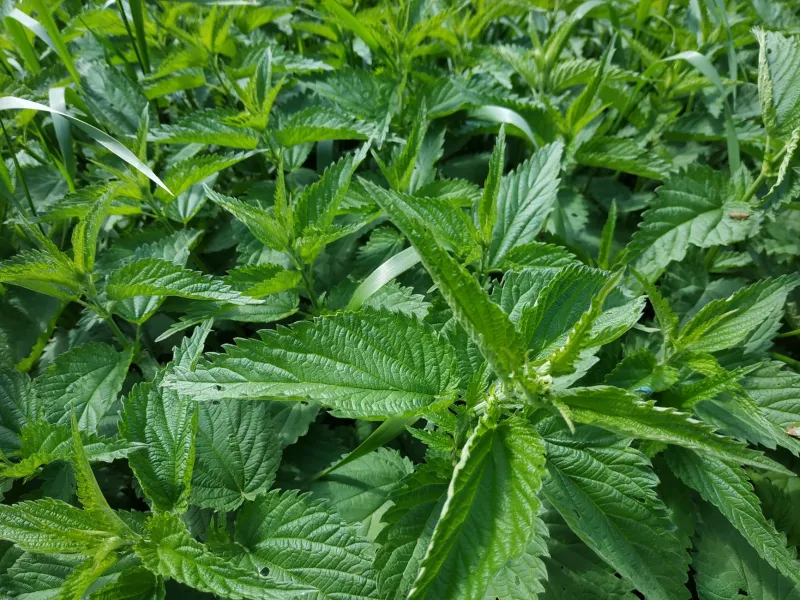
Grass-derived extracts — barley grass, perennial ryegrass, wheatgrass, nettle, clover, plantain — tend to be rich in phenolic compounds, chlorophyll derivatives and various flavonoids. In a formula, these function mainly as antioxidants: they help mop up some of the oxidative load that comes from pollution, UV exposure and general metabolism. That's a modest, real benefit. It won't brighten skin like a well-formulated vitamin C, but it's a sensible background support in a winter routine.
Grass extracts also often arrive alongside humectants and barrier ingredients — glycerin, oat lipids, betaine, amino acids. In practice, this is where most of the visible improvement comes from. Better hydration equals better light reflection. A plumper surface layer looks less grey, full stop.
And there's the sensory side, which is not nothing in November. Green, hay-ish, slightly bitter-smelling botanicals read as fresh. On a dark afternoon that has a small psychological value that no clinical trial will capture.
What they can't do
Be clear-eyed here, because the category gets oversold.
- They are not exfoliants. If the dullness is a buildup of dead cells, an antioxidant serum will not shift it. Gentle chemical exfoliation once or twice a week — lactic or mandelic acid, say — does more for surface light reflection than any botanical blend.
- They are not a substitute for SPF. Winter UV is weaker, not absent. UVA still passes through cloud and glass.
- They do not replace sleep, iron or daylight. No cream compensates for a 3am doomscroll habit.
- They don't out-perform established actives. Retinoids and well-formulated vitamin C have far more evidence for tone and brightness. Grass extracts are supporting players, not headliners.
- They won't suit everyone. Nettle and grass extracts can irritate reactive skin. Patch test, as ever.
A short routine for grey days
Nothing elaborate. Winter rewards consistency over complexity.
Morning: lukewarm rinse or a gentle cream cleanser, a hydrating layer with glycerin or a grass extract you tolerate, a mid-weight moisturiser, SPF 30 if you're outside for more than a stroll. That's it.
Evening: cleanse properly to remove SPF and city grime, then a serum or essence with your grass botanical of choice, followed by something richer than your summer cream — an oat or ceramide-based moisturiser holds up better against radiators.
Twice a week: a mild exfoliant, or a clay-free hydrating mask. Skip the scrubs.
Every night, boringly: a humidifier in the bedroom or a bowl of water near the radiator makes a bigger difference to morning skin than most serums.
The small print
Keep showers short and not scalding. Don't over-cleanse in an effort to feel fresher — it backfires within a fortnight. Get outside at midday even when it's grim, because daylight at the right time of day does more for mood and skin tone than any bottle. And if a product promises to "restore winter radiance", read the ingredient list rather than the front of the carton.
Grass botanicals are a decent, quietly useful addition to a winter routine. They're just not a lamp, a supplement or a night's sleep. Treat them as what they are — pleasant, mildly antioxidant, well-hydrating support — and the flat-light season becomes a good deal more manageable.