Too Warm, Too Bright: A Room-by-Room Storage Audit for Grass Skincare
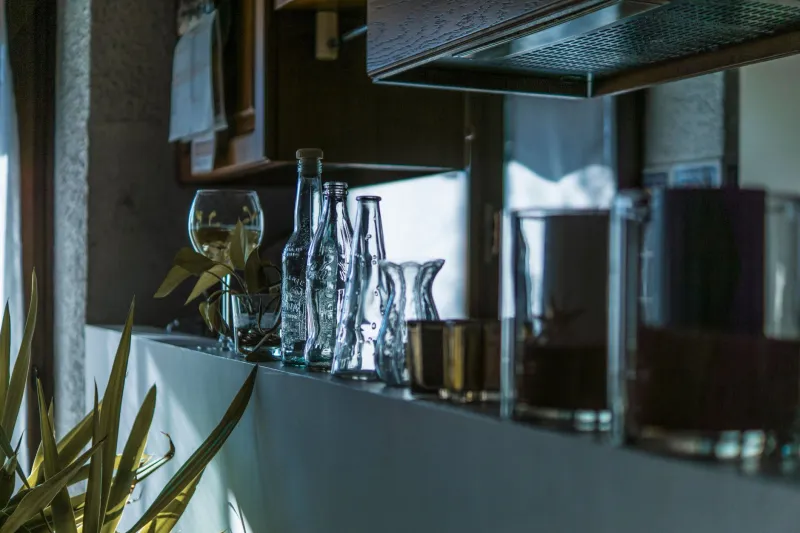
Grass botanicals are hardy in a field. In a conservatory, they are not. Put a green-toned serum on a wicker shelf beside the glass and you have given it heat, light and temperature swings — the three things most likely to push a plant-based formula towards faded colour, strange scent and a texture that no longer behaves. The frustrating part is that the change can be gradual. You notice a serum looks a bit darker in February, or a balm smells less meadow-fresh and more like old cooking oil, and you are left wondering whether that is normal for a botanical extract or whether the product has had it.
This is not a scare story about natural skincare being fragile. It is a storage audit. Grass-inspired products often contain oils, extracts, floral waters and emulsifiers that respond to their environment, and British homes in 2026 are full of awkward little microclimates: conservatories that hit 30C in a mild April, bathrooms with no window, new-build kitchens with underfloor heat, and bedrooms where the radiator is the only shelf. The aim is simple: keep the good stuff good for as long as the label promises, and know when to stop using something.
Why the brightest room is usually the wrong room
A conservatory is a greenhouse with a sofa in it. Even on a grey UK day, UV light comes through glass, and on a sunny afternoon the temperature can climb fast. Then the sun drops, the heating clicks on or the door opens, and the product experiences another shift. Repeated warm-cool cycles are rough on emulsions. They can encourage separation, speed up oxidation in oils and make natural colour compounds fade unevenly. If your grass skincare is in amber glass, that helps, but amber glass is not a magic shield. It reduces some light exposure; it does not cancel heat.
The same logic applies to a south-facing windowsill. It is a lovely place for a basil plant and a terrible place for a dropper bottle. If you like seeing your routine, put the products on a tray in a nearby cupboard and keep the windowsill for something else. The visual cue is not worth the slow bake.
Normal variation versus real spoilage
Botanical extracts are not made in a paint factory. A batch of ryegrass extract or nettle infusion can vary slightly in colour and scent from one production run to the next, and a little sediment in a toner is not automatically a red flag. Some natural oils smell grassy, earthy or hay-like by design. A balm may soften in warm weather and firm up again when the room cools. That is physical behaviour, not necessarily spoilage.
Real spoilage tends to announce itself in a few recognisable ways. An off, sour or rancid smell is the clearest clue. Mould — fuzzy patches, black spots, a weird bloom on the surface — means bin it. Separation that will not come back together after a gentle shake is suspicious, especially in a cream or lotion. Gritty texture where there was none, or a colour that has changed dramatically and unevenly, is worth taking seriously. If a product has changed and you are not sure, stop using it. You are not being precious; you are being sensible.
Packaging clues that actually matter
Start with the period-after-opening symbol. That little open-jar icon with a number inside — 6M, 12M — is not decoration. It tells you how long the product is expected to stay stable after you first open it, assuming reasonable storage. The unopened shelf life is a separate thing. A serum that has sat unopened in a hot conservatory for a year may not behave like one that has been kept in a cool cupboard, even if the date looks fine.
Airless pumps and tubes are forgiving because they limit contact with air and fingers. Droppers and open jars are more exposed. A wide-mouth balm that you dig into with damp hands is asking for trouble in a steamy bathroom. If the packaging came with a spatula, use it. If the label says keep below 25C, believe it. And if a product has a batch code, note it when you open it — not because you need a spreadsheet, but because it helps you remember how long it has been in rotation.
Room-by-room rules for British homes
Conservatory
Do not store skincare here. Not in a cabinet, not in a pretty basket, not under a towel. If you have no choice, use an opaque lidded box in the most shaded corner, away from the glass and the radiator, and treat it as a short-term holding spot rather than a home. In practice, move it.
South-facing windowsill
No. Move products to a drawer or cupboard on the same wall but out of direct sun. If you want them visible, use an opaque caddy that closes.
Bathroom
Steam and warmth are the issues, not water splashes alone. Keep the routine in a closed cabinet away from the shower, and run the extractor fan. Do not leave a balm open on the bath ledge while you soak. If your bathroom has no window and no fan, be extra strict: keep only what you use daily there, and store the rest elsewhere.
Kitchen
Handy for morning routines, risky near the kettle, hob and dishwasher. Keep products in a cupboard away from steam and heat, not on the windowsill above the sink. A utility room can be worse if the washer and dryer run hot.
Bedroom
Often the best room: stable temperature, less steam, easy to keep dark. A bedside drawer or a closed box away from the radiator works well. Avoid the shelf directly above a radiator or under a window that gets full sun.
Hallway and cupboards
A cool, dark hallway cupboard is a good default. An airing cupboard is warm and dry, which suits towels but not oils and botanical emulsions. Check the actual temperature rather than assuming.
Fridge
Only if the label says so. Fridge storage can help some fresh-style products, but it also introduces condensation and temperature shock every time you take them out. Do not fridge a balm just because it feels fancy. Keep it stable instead.
The two-minute audit
Once a season, take everything out and check it properly. Smell it, look at the colour, feel the texture, check the period-after-opening date and wipe the threads of jars and bottles. If something has been sitting unused in the conservatory since summer 2026, it has probably had a harder life than you think. Grass skincare is not meant to be precious, but it is meant to be stored with a bit of common sense. A cool, dark cupboard is less photogenic than a sunlit shelf. It is also much kinder to the bottle.