The Field Comes First: Why Soil Health Is the Quietest Ingredient in British Grass Skincare
Walk into a health shop in a British city this winter and you will see the word grass doing an enormous amount of work. Wheatgrass on a serum. Barley grass on a powder sachet. Ryegrass on a body oil with a watercolour meadow on the front. What you almost never see is the field itself — the soil, the grazing regime, the rotation, the harvest date.
For a category that leans so heavily on the idea of meadows and British countryside, the ground underneath the plants gets remarkably little airtime. This is not another label-decoder; we have written one of those and they have their place. This is about the questions that sit upstream of the ingredient list. Who grew the plant, where, and is the soil it grew in being looked after or quietly run down?
It is the least photogenic part of natural skincare, and possibly the most important.
The plant is only a summary of the soil
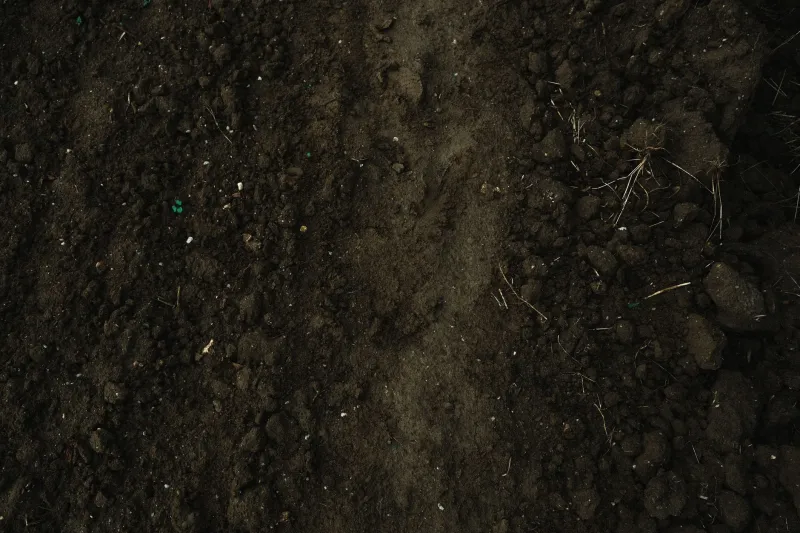
A grass plant is a middleman. Everything it contains — nitrogen, phosphorus, potassium, magnesium, the trace minerals, the sugars, the antioxidants — came out of the ground or the air. Soil with decent structure and a functioning community of fungi, bacteria and worms holds water better, cycles nutrients better and generally produces a sturdier plant.
Soil that has spent decades under the same crop and heavy inputs tends to produce something thinner and more dependent on fertiliser, and more likely to struggle in either a drought or a wet British spring. That is not a skincare claim. It is just how plants work.
Regenerative grazing, minus the buzzword fog
In plain English: moving livestock around small paddocks so each patch of grass gets a long rest instead of being nibbled to the roots and left. Animals come back, graze hard, move on. Roots go deeper because the plant is not constantly fighting to regrow a leaf. Dung and urine get spread by the animals rather than by a tractor, so fewer bought-in inputs are needed.
The honest caveat: the carbon claims attached to regenerative grazing are genuinely contested, and anyone presenting them as settled science is overselling. The claims about soil structure, water retention and sward diversity are better supported and, for our purposes, more relevant anyway. Healthier pasture generally means a more nutrient-dense plant, and a more nutrient-dense plant is a better starting material for an extract.
Crop rotation is the bit that never makes the packaging
Permanent pasture is one thing. But most wheatgrass and barley grass used in skincare is grown as a crop, and crops live or die by rotation. Alternating a grass with clover or beans fixes nitrogen naturally, breaks pest and disease cycles, and stops the soil from being mined for the same nutrients year after year.
Rotation is unglamorous. You cannot photograph it well or put it on a jar. But a monoculture grass crop grown on the same field for a decade is a very different raw material from one that comes out of a mixed rotation — even if both end up labelled identically as wheatgrass extract.
Harvest and handling matter as much as the field
Cut grass oxidises fast. Within hours, the fragile compounds that a formulator is paying for start to degrade. This is why the gap between cutting and stabilising — drying, juicing, freezing, whatever the producer uses — is arguably more commercially significant than the farming philosophy.
Ask a brand about soil health and you may get a story. Ask about the time between harvest and processing and you will get either a number or a shrug, and the shrug is informative.
So does any of this change what happens on your skin?
Here is where we have to be straight with you. Nobody has published a clinical trial comparing a regeneratively grown wheatgrass extract against a conventionally grown one, and any brand implying otherwise is selling rather than telling.
What we can reasonably infer is that the same ingredient name covers a wide range of raw material. Mineral and antioxidant content shifts with growing conditions. Nitrate levels are higher in heavily fertilised grass. A plant that has been through a dry spell produces different stress compounds than one that has not. None of that guarantees a better moisturiser. All of it means the word on the jar is not the whole story.
Five questions that get you further than a label
Where exactly is it grown? County and farm, not just 'the UK'. A surprising number of British-sounding grass ingredients are imported and blended here.
Is it pasture or a crop, and what does it rotate with? Not every brand will know. The ones that do tend to be worth a second look.
When was it harvested, and how quickly was it stabilised? Freshness is not a marketing fiction in this category.
Can the brand name its supplier? If the answer involves a distributor rather than a grower, that is not a scandal — it is just useful information.
What percentage of the formula is actually the extract? Grass extracts are frequently present at one or two per cent, sometimes less. That can still be a perfectly good formula, but you should know whether you are paying for the ingredient or the illustration.
What a good answer sounds like
Something like: grown on a mixed farm in Herefordshire, cut in late May, dried within six hours, extract at 2 per cent, rest of the formula built on glycerin and oat. That is a supply chain you can picture. It is worth far more than 'sustainably sourced botanicals' printed in a lovely serif.
What to do when nobody will tell you
Ask anyway. A polite email or a direct message gets a real answer more often than people expect, and the reply itself tells you something about the company. Look for a named farm, a named grower, a harvest window. Treat certification logos as useful but partial — organic status tells you about inputs, not necessarily about soil biology or rotation.
And if the product works for your skin and the answers are vague, you can still buy it. Just do not buy the story as well.
The takeaway
Soil is not a trend with a hashtag and a launch party; it is the beginning of the supply chain whether or not anyone mentions it. The most useful shift a grass skincare shopper can make in 2026 is to buy a little less and ask a little more. The field comes first. The serum is just what happens afterwards.