What the Mower Missed: A Fairer Look at Clover, Yarrow and Plantain
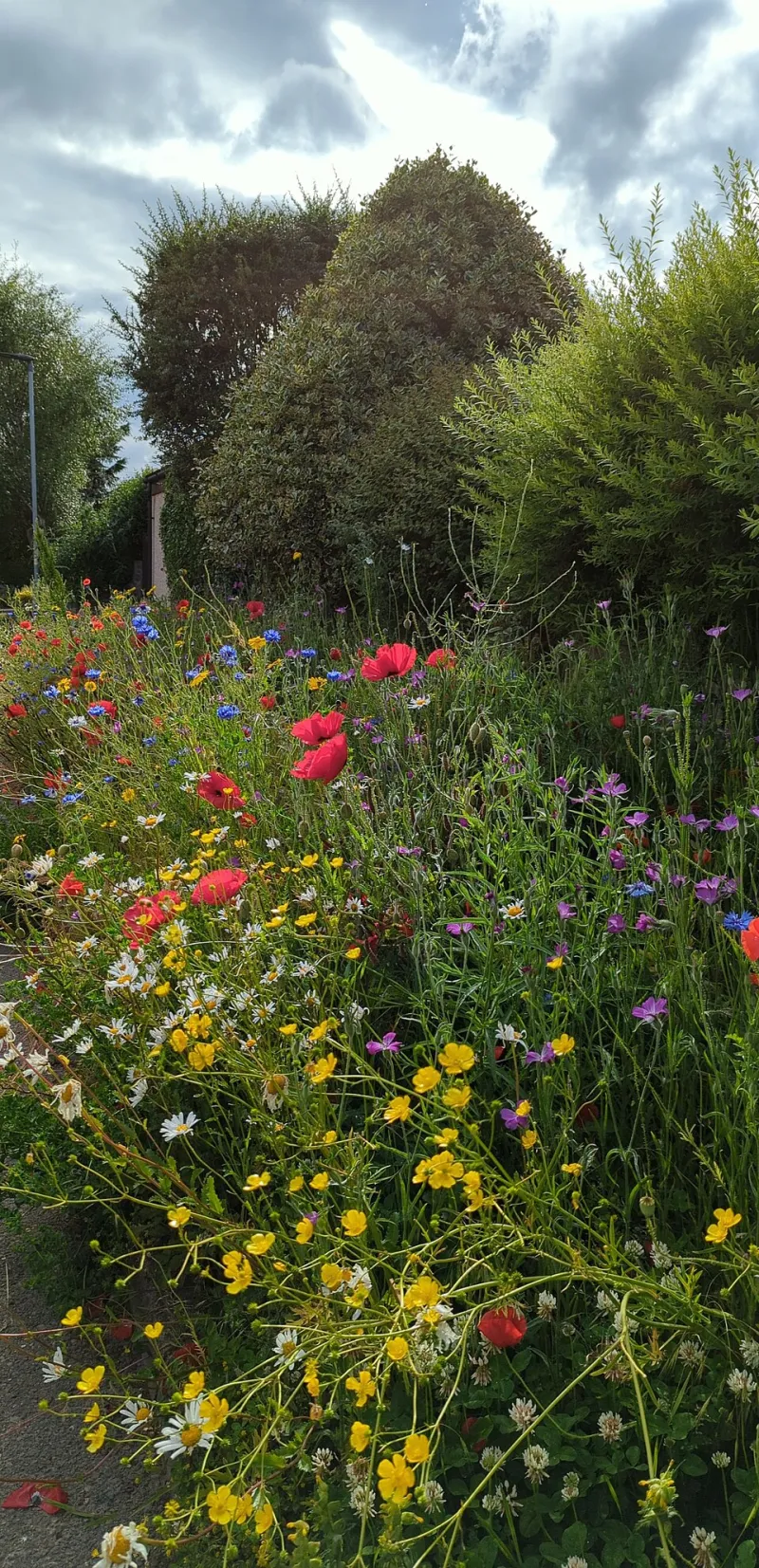
Photo: Easypeels, CC BY-SA 4.0, via Wikimedia Commons
Look down at any British verge in June and you'll see the same three characters: white clover creeping through the ryegrass, a yarrow head or two standing up on its woody stem, and plantain laid out flat like something dropped from above. Most of us have spent decades calling them weeds. Several of them have been dug out of lawns with a fork and a certain amount of swearing.
Now they're on ingredient lists. That's not automatically a swindle — but it's not automatically a breakthrough either, and the gap between the two is where most of the marketing lives.
Three plants, three very different evidence bases
It's tempting to treat 'meadow botanicals' as a single category. They aren't. The science behind each of these is wildly uneven, and lumping them together flatters all three.
Red clover: a plausible antioxidant with a thin topical file
Trifolium pratense is the one with the most research, and almost all of it involves swallowing capsules rather than smoothing on a cream. Its isoflavones — genistein, daidzein, biochanin A, formononetin — are phytoestrogens, and the trials that made clover famous looked at menopausal symptoms and, in a few small studies, skin thickness and elasticity from the inside. The results were mixed then and they remain mixed now.
Topically, there's decent in-vitro antioxidant work and a reasonable theoretical case for isoflavones in a formula. What there isn't is a stack of well-controlled facial trials. Which is fine — most cosmetic ingredients don't have one. It just means clover should be sold to you as a nice antioxidant, not as a botanical facelift.
One distinction worth holding onto: a clover extract in a cream is not the same intervention as clover isoflavones in a capsule. Different dose, different route, different evidence.
Yarrow: a genuinely good herb and the trickiest of the three
Achillea millefolium has the longest folk pedigree of the group — the wound herb, the stauncher of bleeding, named for a man who was supposedly very hard to kill. Modern lab work gives it some cover: the sesquiterpene lactones and flavonoids show respectable anti-inflammatory activity in vitro, and the essential oil's chamazulene is where that deep blue colour comes from.
Here's the complication, and it's an important one. Yarrow belongs to the Asteraceae family, alongside chamomile, arnica, feverfew and marigold. If you react to any of those, you have a meaningful chance of reacting to yarrow too. Worse, yarrow essential oil carries its own recognised sensitisation risk. A low-dose water extract is a very different proposition from a fragrant oil, and the label won't always make the distinction obvious to a shopper.
Our view: worth trying, worth being careful with, and not the one to start with if your skin is currently unhappy.
Plantain: the quiet one that suits a barrier cream
Plantago lanceolata and its broad-leaved cousin are the least glamorous and, for reactive skin, probably the most appealing. Mucilage, iridoids, aucubin — soothing, film-forming, faintly slippery in the way that suggests comfort rather than correction.
The evidence is thin but not empty: some small studies on soothing and on wound healing in cream form, plenty of traditional use for stings and grazes. Nobody is going to publish a landmark trial on plantain. Equally, nobody needs one to justify putting it in a balm for windburnt cheeks in February.
Reading the label: is the extract actually there?
A few practical rules, none of them foolproof.
Don't over-read position in the list. Ingredients present below 1% may be listed in any order, so the fact that an extract sits just above the phenoxyethanol tells you it's small — but not how small.
Look at what form it takes. A flower extract, a leaf juice, a freeze-dried powder and a fermented filtrate behave differently even at the same percentage. Juice and powder carry more plant mass but less standardisation; extracts are usually more consistent but far more dilute.
Be sceptical of the verb 'contains'. Every product contains what it contains. The interesting question is how much, and almost no brand tells you. Where a percentage is stated on the front of the pack, that's a good sign — it means someone decided the number was defensible.
Remember that a small amount can be either meaningful or decorative. There's no universal threshold. It depends entirely on what the material is and what it's meant to do, which is why vague claims about 'the power of the meadow' are so hard to argue with and so easy to write.
Patch-testing, properly
This matters more with wild-plant actives than with anything else in your cabinet, because raw material varies by season, site and harvest.
Apply the finished product — not a herb, not an essential oil — to the inner elbow, twice daily for three days, and leave it alone in between. Reactions are delayed; a quick sniff and a same-day look tell you nothing. If you already know that chamomile or arnica brings you out in a rash, approach yarrow with real caution.
Three price points, one rule
Under £15: high-street and own-brand soothe ranges are where plantain and oat tend to turn up, often fragrance-free, often unglamorous. Read the INCI, ignore the poetry on the front.
£18–£35: the British indie middle ground, where you're most likely to find a stated percentage and a named farm. Ask the brand; the good ones answer.
£45 and up: small-batch meadow creams, frequently beautiful, frequently fragranced with the very essential oils that make yarrow complicated. Expensive is not the same as suitable.
Formulations change without warning, so check the current INCI on the maker's own site rather than a retailer page.
On picking your own
It's worth saying plainly: don't. In Great Britain the Wildlife and Countryside Act 1981 makes it an offence to uproot a wild plant without the landowner's permission, and many of the prettiest verges are protected sites on top of that. Roadside plants also collect exactly what you'd expect them to collect.
If you want these botanicals, buy them cultivated or certified organic — Soil Association or COSMOS certification is a reasonable shorthand — and be sceptical of 'wildcrafted' as a virtue in itself. A plant harvested sustainably at scale is usually a farmed plant.
The short version
Clover is a fair antioxidant with an overstated reputation. Yarrow is a real herb with real sensitisation potential. Plantain is the quiet, reliable one, and the one we'd suggest trying first. None of them will transform your skin, all of them are more interesting than another bottle of hyaluronic acid, and all three deserve better than being sold on the strength of a meadow photograph.