The Lawn Illusion: What 'Green' Fragrance Really Does to Reactive Skin

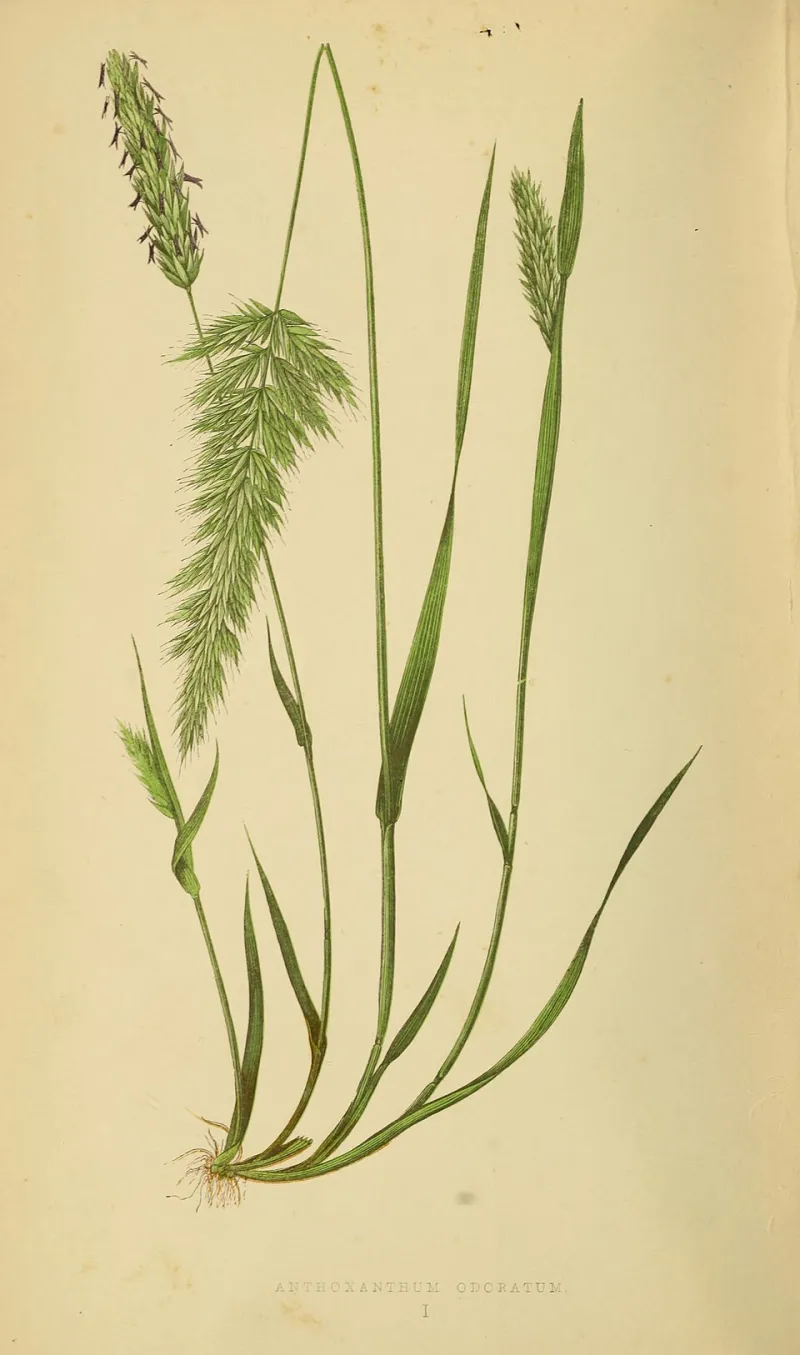
Photo: The Saunterer , CC BY-SA 2.0, via Wikimedia Commons
There's a very specific smell that does something to a British brain: the first cut of the year, a cricket outfield, the verge outside a garden centre in June. Chemists will tell you it's mostly cis-3-hexenol (leaf alcohol) plus its acetate cousin, released when plant cells are torn open and enzymes meet oxygen. Perfumers have a single word for it. They call it green.
Here's the part worth knowing. A moisturiser that smells like a freshly mown lawn has almost certainly never been anywhere near a lawn.
The extract and the aroma are two separate purchases
Grass botanicals — barley grass, wheatgrass, oat grass, alfalfa — usually arrive in a formula as a water or glycerin extract, a juice powder or a fermented filtrate. At the 0.5–2% levels you typically see, most of them contribute very little scent. They're in there for vitamins, minerals, amino acids and polysaccharides: the humdrum, quietly useful stuff.
The lawn smell is a different ingredient order entirely. It's one aroma material, or a small accord of them, dosed at something like 0.05–0.3%. So the thing that makes a product feel grassy and the thing a brand can point to on a label are often unrelated. That isn't automatically dishonest — plenty of formulas contain both — but the link is looser than most of us assume when we twist off the cap and inhale.
'Natural fragrance' is not a gentler category
This is where people get caught. The assumption runs: synthetic means harsh, botanical means kind. Dermatology doesn't really cooperate with that.
Fragrance as a category is the most common cause of cosmetic contact allergy, full stop. It matters surprisingly little whether the molecules came from a beaker or a steam-distilled plant. Galbanum resin, violet leaf absolute and the various green-floral absolutes are natural, complex and genuinely beautiful — and they are mixtures of dozens of terpenes, alcohols and aldehydes, some of which are precisely the ones that set skin off. A natural essential oil can be a harder thing to patch-test your way around than a single synthetic molecule, because you're testing a crowd.
Then add oxidation. Linalool and limonene are unremarkable until they sit in a warm bathroom cabinet and oxidise into hydroperoxides, which are considerably less unremarkable. A jar that smelled lovely in March is a different chemical proposition by August.
What a reaction actually looks like
Not dramatic, usually. Fragrance reactions tend to be delayed contact dermatitis: nothing, nothing, then redness, dryness, itching or a slightly scaly patch anywhere from 12 to 72 hours later. The sites tell the story — eyelids, neck, the sides of the face, the backs of the hands. My skin just doesn't like it is a real clinical description, and fragrance is one of the usual suspects behind it.
There's also the stinging, tight, hot-cheeked response on skin that's already compromised, which isn't allergy at all but a barrier that's struggling. Either way the fix is the same: simplify, take the scent out, rebuild.
Where UK labelling stands in 2026
UK cosmetics rules still require the 26 named fragrance allergens to be declared on the INCI list once they pass 0.001% in a leave-on product, or 0.01% in a rinse-off. Under those thresholds they disappear into the single word Parfum. Which means a label can be entirely honest and still tell you almost nothing.
Worth watching: the EU has legislated to expand that list to somewhere north of 80 substances, with newly placed products needing the longer declaration from 31 July 2026 and existing ones by 2028. The UK has not mirrored the change. In practice, imported products may start arriving with much longer allergen lists than a UK-made equivalent — not because they're riskier, but because they're being described more precisely. Don't read a long list as a warning. Read a very short one as an absence of information.
A shopper's checklist
- Treat Parfum as a shrug, not a promise. It's a legal umbrella, not a guarantee of anything in particular.
- Don't assume fragrance-free and unscented are the same thing. Unscented can mean fragrance was added to mask the base.
- Patch test properly. Inner forearm or behind the ear, product as sold, twice a day for three days. Because reactions are delayed, a same-day check proves very little.
- Keep scented products to one. If your cleanser, serum, moisturiser and SPF all carry fragrance, you're stacking exposure and making the culprit impossible to find.
- Be wary of the phrase essential oil blend. It sounds reassuring. It's a mixture, and mixtures are harder to reason about.
- Buy smaller. A 30ml tube you actually finish beats a 100ml jar that oxidises at the back of the shelf.
- Keep a note. Product, date opened, reaction timeline. Two or three entries and patterns start appearing.
The fragrance-free route to a grassy routine
You can build a grass-botanical routine with no scent whatsoever. You just have to shop the ingredient list instead of the smell.
Under £10. Fragrance-free oat and glycerin cleansers from high-street own-brand sensitive ranges are the least glamorous and most reliable place to start. Short INCLs, no Parfum, done.
£10–£25. Plain oat cleansing balms and unscented barrier creams do the heavy lifting, while the grass arrives separately as barley grass or wheatgrass powder from a UK supplement seller, mixed into a mask at home where you control the dose. This is also the cheapest way to find out whether grass botanicals agree with you at all.
£25 and up. Fragrance-free ranges built around fermented grass filtrates and oat lipids do exist, mostly from small British makers. Check the current INCI on the brand's own site rather than a retailer listing, which can lag a season or more behind a reformulation.
One last thought. The smell of cut grass is a memory, not an ingredient. You can enjoy it on a walk, at the allotment, on the way to the shops — and still keep your face well clear of the fragrance mix. Those two pleasures aren't in competition, whatever the packaging suggests.