The Chalk Line: Read Your Bathroom Water Before You Blame the Grass Cleanser
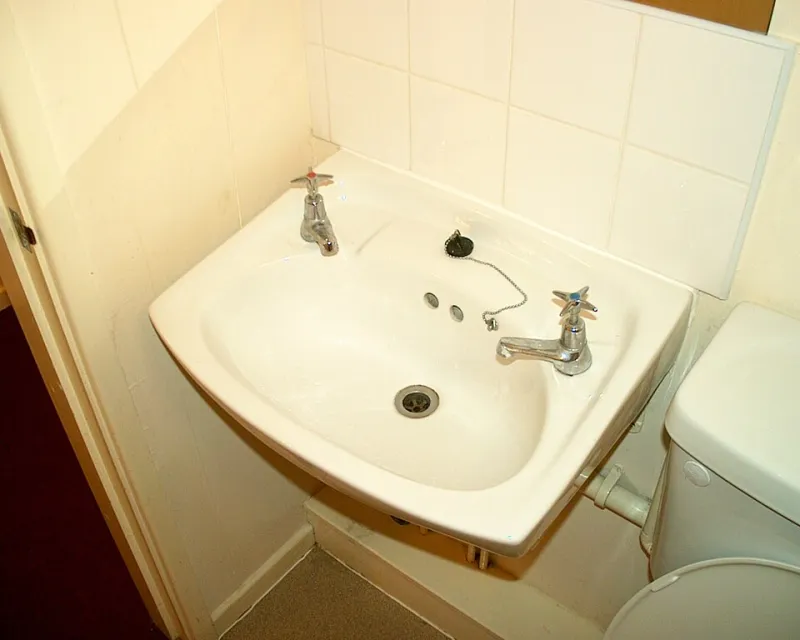
Photo: Trosmisiek, CC BY-SA 4.0, via Wikimedia Commons
There is a particular kind of disappointment that arrives after a promising cleanse. You have bought the low-foam, grass-botanical number. You have used lukewarm water, patted dry, and then caught sight of your face in the bathroom mirror. It looks slightly dull. The skin feels a bit tight, yet also a bit slippery. Your flannel has gone stiff. The kettle is wearing a cardigan of limescale. And you start to wonder whether the cleanser is the problem.
Sometimes it is. But in a lot of British bathrooms, the water has already joined the conversation before the product has had a chance to speak.
Hard water is not a niche issue
Hard water contains dissolved calcium and magnesium. It is not dangerous, and it is not a moral failing of your postcode. It is geology plus plumbing. In the UK, the general pattern is familiar: Scotland and much of Wales tend to be softer, while the South East, London, East Anglia and parts of the Midlands can be firmly in hard-water territory. Everything else is a patchwork.
That matters for cleansing because hard-water minerals can interact with surfactants and plant-derived materials. They can reduce lather, leave behind a faint mineral film, and make some rinse-off textures feel less clean than they actually are. Grass extracts, saponin-rich botanicals and the mild surfactant systems used in natural cleansers are not immune to this. They are simply working in the same bathroom as everyone else.
The film is not always the formula
A grass cleanser can leave a film for several reasons. It may be rich in emollients. It may be a milky or balm-to-milk texture that needs more water and more patience. It may contain plant gums or extracts that feel slightly cushioned on skin. Or the water may be hard enough that the rinse never quite clears.
The tell-tale signs are usually small and domestic:
- Your face feels squeaky in one patch and slightly tacky in another.
- A white or grey haze appears around the hairline, jaw or nostrils.
- Your cleansing cloth stiffens as it dries.
- The shower screen develops a cloudy bloom faster than you expect.
- Your usual cleanser suddenly seems to need twice the water.
- Soap scum gathers around the plug hole, even if you do not use bar soap.
A squeaky finish is often read as clean. It is not a reliable signal. Squeak can mean the skin has been stripped, but it can also mean minerals and cleanser residue have dried down into a slightly chalky finish. Clean skin should not feel tight and filmy at the same time.
A quick regional reality check
This is a rough guide, not a postcode verdict. Water hardness changes within towns, and suppliers blend sources. Use it as a starting point before you enter a full-blown product inquest.
- Scotland: mostly soft, with harder pockets in some areas.
- Wales: largely soft to moderately hard, but not uniform.
- Northern Ireland: mixed, with softer supplies in many areas and harder pockets elsewhere.
- North West and North East England: often soft to moderately hard, with local variation.
- Midlands: moderate to hard in many places.
- London, South East and East Anglia: frequently hard to very hard.
- South West: mixed, with hard pockets in several areas.
Your water supplier will usually publish a hardness figure for your postcode. That is more useful than a national map and much more useful than blaming a cleanser after one bad rinse.
Three at-home tests worth trying
You do not need a lab coat. You need a kettle, a glass and a little patience.
The kettle test. If limescale builds up quickly, your water is likely hard. Descale the kettle and note how long it takes to return. That rhythm tells you more about your bathroom than a hundred reviews.
The glass test. Fill a clean glass with tap water and leave it to stand. A faint cloudy ring or a white deposit around the rim after it dries is a useful clue. It is not a precise measurement, but it is a nudge.
The lather test. Wash your hands with a simple soap and note how easily it lathers. Hard water often gives a thinner, quicker-disappearing lather. Soft water feels almost eager by comparison. This is not about demanding big foam from a facial cleanser; it is about understanding why your rinse behaves the way it does.
Adjust the rinse, not the whole shelf
If hard water is part of the picture, the first move is not to bin every grass-based product in the cabinet. Start with the cleanse itself.
Use lukewarm water rather than hot. Hot water can make the skin feel tighter and can encourage you to over-rinse. Wet your face properly before applying cleanser, then use enough water to emulsify the texture fully. Milky cleansers often need a little more water than gel cleansers, not less. Work the product in with fingertips, then remove it with a soft, damp cloth and rinse again. A final pass with a clean cloth and cool water can help lift residue without stripping.
If you live in a very hard-water area, a filtered shower head or a jug of filtered water for the final rinse can be a practical compromise. It will not turn hard water soft, but it can reduce the amount of minerals in that last contact with your skin. Do not chase a squeak. Chase a comfortable, residue-free finish.
What to look for on the label
Ingredient lists are not a hardness chart, but they can explain texture. Citrate and gluconate are common chelating helpers in formulas; they can support rinse-off performance in hard water. Saponin-rich plant extracts may lather differently from conventional surfactants. Rich oils and butters are not bad, but they need more careful rinsing. None of this means the cleanser is faulty. It means the formula has a personality, and your water has one too.
Grass botanicals are guests in a cleanser, not the plumbing. They can be lovely, sensible and well-chosen. But if the rinse is fighting calcium and magnesium, even a good formula can feel as if it has left a calling card.
Before you write off the green bottle, read the kettle. Read the shower screen. Read the cloth. Then adjust the water, the cloth and the rinse. Most of the time, that is the more honest place to start.